How Much Does a Level 2 EV Charger Installation Cost in Ottawa?
If you’re getting an EV in Ottawa, the charger itself is only part of the installation cost.
The bigger question is what your house needs to make the charger work safely. A charger beside an electrical panel in an attached garage is a fairly simple job. Running power to a detached garage, working around finished walls, or dealing with limited electrical capacity can turn it into a much larger project.
For a straightforward residential installation, budgeting around $1,500 to $2,000 for the electrical installation is a reasonable starting point. More complicated installations can cost considerably more.
The important thing is not to treat that number as a guaranteed Ottawa-wide price. An electrician needs to look at the panel, the proposed charger location and the route between them before giving you a firm quote.
What does a Level 2 charger installation cost?
A rough way to think about the cost is:
| Installation | Rough budget |
|---|---|
| Simple attached-garage installation | $1,500-$2,000 |
| Longer or more difficult attached-garage installation | $2,000-$3,000+ |
| Detached garage | $3,000+ |
| Installation requiring major panel or service work | Potentially $5,000+ |
These figures are for planning, not fixed prices.
They can also vary depending on whether the charger is included, how much wiring is required, whether the walls are finished, and whether the electrical service needs additional work.
If someone gives you a very low price without looking at your electrical panel or the installation location, ask exactly what is included.
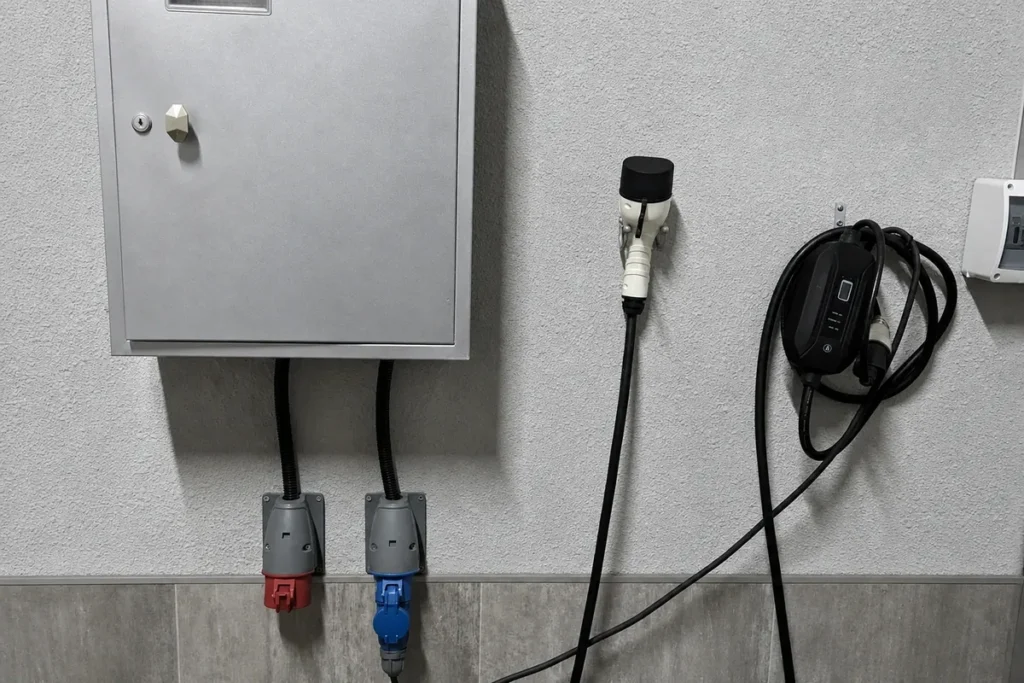
Why does one house cost more than another?
The charger itself isn’t usually what makes the installation expensive.
The electrical work does.
1. The distance from the panel
A charger installed a few feet from the electrical panel is relatively straightforward.
If the charger is on the opposite side of the house, the electrician may need substantially more cable, conduit and labour. Finished walls can make the job more difficult because the wiring route may not be readily accessible.
This is one reason two homeowners can buy the same EV charger and receive very different installation quotes.
2. Attached vs. detached garage
A detached garage is usually more involved.
Power may have to travel underground from the house to the garage. Depending on the existing electrical installation, the project could involve a feeder, conduit, trenching and a panel in the garage before the actual EV charger circuit is installed.
If you’re getting quotes for a detached garage, make sure the contractor explains whether the price includes:
- Trenching
- Underground conduit
- Feeder wiring
- Garage panel work
- Charger circuit
- Restoration of disturbed areas
Otherwise, two quotes that appear to be thousands of dollars apart may not actually be quoting the same work.
3. The electrical capacity of the house
This is where homeowners often get confused.
A 100-amp service does not automatically mean you need an upgrade.
A 200-amp service does not mean you can simply add any charger you want either.
The electrician needs to consider the home’s existing electrical loads and determine whether the proposed EV charging load can be accommodated.
EV charging can be a significant continuous load, particularly if the charger will operate for several hours overnight.
If there isn’t enough capacity, the solution isn’t necessarily a service upgrade. Depending on the installation, load management may be an option.
Do I need to upgrade a 100-amp panel for an EV charger?
Not necessarily.
Imagine two Ottawa homes with identical 100-amp services.
The first might have relatively modest electrical demand and enough capacity for the proposed EV charging load.
The second might have electric heating, a large electric water heater, a hot tub and several other substantial loads. It may have much less capacity available.
The service size is therefore only part of the picture.
If you’re told that your panel needs to be upgraded, ask the electrician:
“Did you perform a load calculation, and is load management an option?”
That doesn’t mean an upgrade isn’t necessary. It simply gives you a better understanding of why it is being recommended.
How much power does a Level 2 charger use?
Residential Level 2 chargers typically operate from a 240V circuit.
For reference:
| Charging current | Approximate power |
|---|---|
| 16A | 3.8 kW |
| 24A | 5.8 kW |
| 32A | 7.7 kW |
| 40A | 9.6 kW |
| 48A | 11.5 kW |
The charger rating isn’t the same thing as the charging speed your vehicle will actually receive.
Your EV has its own onboard AC charger, which determines how much AC power it can accept. If the vehicle can only accept a certain amount, installing a higher-rated EVSE won’t make that particular vehicle charge faster.
That’s why buying the biggest charger available isn’t necessarily the best decision.
Do I need a 48A charger?
Not necessarily.
A 48A EVSE can make sense for some vehicles and electrical installations, but it’s not automatically the right choice.
Before buying one, find out:
- How much AC charging power your vehicle supports
- What circuit the EVSE requires
- Whether your home’s electrical service can support it
- Whether load management is necessary
- Whether the charger will be hardwired or connected to a receptacle
In other words, choose the charger after you’ve established what the electrical installation can support, rather than assuming a bigger charger is always better.
Hardwired vs. plug-in EV charger
You generally have two options for a residential installation.
Hardwired
The EVSE is permanently connected to the circuit.
This can be a good choice for a permanent installation and is often convenient for outdoor applications when the equipment is properly rated.
Plug-in
The electrician installs an appropriate receptacle and the EVSE plugs into it.
This can make it easier to replace the charging equipment later, but it does not eliminate the electrical requirements. The circuit and receptacle still need to be appropriate for the intended charging load.
Neither option is automatically better. The right choice depends on the equipment and the installation.
What about a detached garage?
If your garage is detached, ask for the electrical work to be broken down on the quote.
For example:
| Work | Ask whether it’s included |
|---|---|
| Feeder from the house | Yes |
| Underground conduit | Yes |
| Trenching | Yes |
| Garage panel | Yes |
| EV charger circuit | Yes |
| EVSE | Yes |
| Restoration | If applicable |
| ESA notification | Yes |
A detached garage can be substantially more expensive than an attached garage simply because getting power to the building is a bigger job.
A 25-foot route through an accessible attached garage is not comparable to running power 100 feet underground across a driveway.
What about older Ottawa homes?
An older home isn’t automatically a problem.
It does mean the electrician should look more carefully at the existing electrical installation.
Depending on the house, they may encounter older service equipment, previous renovations, older wiring or other modifications that aren’t obvious from looking at the main panel.
That doesn’t mean the entire house needs to be rewired.
The relevant question is whether the existing electrical system is suitable for the additional EV charging load and whether any deficiencies need to be addressed.
Do I need an ESA permit?
Yes.
ESA states that all EV charger installations require an electrical permit, also called a notification of work, before the work begins.
If you’re hiring a contractor to perform electrical work in your Ontario home, ESA says the work must be performed by a Licensed Electrical Contractor.
The contractor normally handles the ESA notification as part of the job.
When comparing quotes, ask whether the ESA notification and inspection process are included in the price.
What should be included in an EV charger quote?
Don’t compare quotes based only on the number at the bottom.
A useful quote should tell you what you’re actually paying for.
At minimum, ask about:
- EVSE brand and model
- Maximum charging current
- Circuit size
- Approximate wiring distance
- Wiring method
- Conduit
- Hardwired connection or receptacle
- Panel modifications
- Load calculation
- ESA notification
- Inspection
- Wall penetrations
- Outdoor weatherproofing
- Trenching, if required
- Load-management equipment, if required
- Labour
- Taxes
- Warranty
A quote that says “EV charger installation: $1,500” doesn’t tell you much.
Another contractor might quote $2,000 but include the charger, a longer cable run, conduit and the ESA work.
The second quote could easily be the better deal.
Should I buy the charger myself?
You can, but it’s worth having the electrical requirements confirmed first.
Before ordering an EVSE, check:
- Maximum charging current
- Required circuit
- Hardwired or plug-in configuration
- Indoor/outdoor rating
- Canadian approval or certification
- Manufacturer installation requirements
- Compatibility with your vehicle
The last thing you want is to buy a 48A charger and then discover that your planned installation needs to be configured for a lower charging current.
The charger should fit the electrical installation, not the other way around.
How long does installation take?
A straightforward installation can often be completed in one visit once the equipment and electrical requirements have been confirmed.
More involved work can take longer.
For example, a project involving a panel upgrade, service work, underground wiring or extensive access through finished walls may require additional time and coordination.
If your vehicle delivery date is approaching, arrange the electrical assessment before the car arrives.
Are there federal rebates for installing a home charger?
Don’t assume that a federal EV incentive covers the cost of your home charger.
The federal Electric Vehicle Affordability Program (EVAP) is a vehicle incentive. It is not a general rebate for residential EV charger installation.
For charger-specific incentives, check the current program offered by the relevant utility or government agency before including a rebate in your budget. Programs and eligibility requirements can change.
A realistic Ottawa EV charger budget
If you’re trying to work out how much money to set aside, I’d use the following as a starting point:
Simple attached garage: approximately $1,500-$2,000
More complicated attached garage: approximately $2,000-$3,000+
Detached garage: $3,000+, depending heavily on the distance and underground work
Major electrical service or panel work: potentially $5,000+
These aren’t promises of what your installation will cost. They’re useful starting points for deciding whether you’re dealing with a relatively simple electrical job or a larger project.
The biggest mistake is assuming that every home should cost the same.
What to do before you buy an EV charger
If you’re getting an EV soon, the easiest way to avoid surprises is to have the electrical installation assessed first.
Ask the electrician to confirm:
- How much electrical capacity is available
- What charging current makes sense
- Where the charger should be installed
- How the wiring will get there
- Whether load management is required
- Whether the panel or service needs work
- What the ESA requirements are
- Exactly what is included in the quote
Once you have those answers, you can choose the charger with a much better idea of what the complete project will actually cost.
The Bottom Line
For a straightforward Ottawa home with an accessible electrical panel and an attached garage, around $1,500-$2,000 is a reasonable starting budget for the electrical installation.
That number can rise quickly if the charger is far from the panel, the garage is detached, the wiring route is difficult, or the home’s electrical service needs additional work.
You don’t automatically need a 200-amp service just because you’re installing a Level 2 charger, and you don’t automatically need a 48A EVSE either.
The right installation starts with the house, not the charger.
Have the electrical system assessed, find out what the vehicle actually needs, and compare quotes based on the work included rather than the headline price.