Burning Smell, Buzzing Panel or Half the House Without Power? What Ottawa Homeowners Should Do
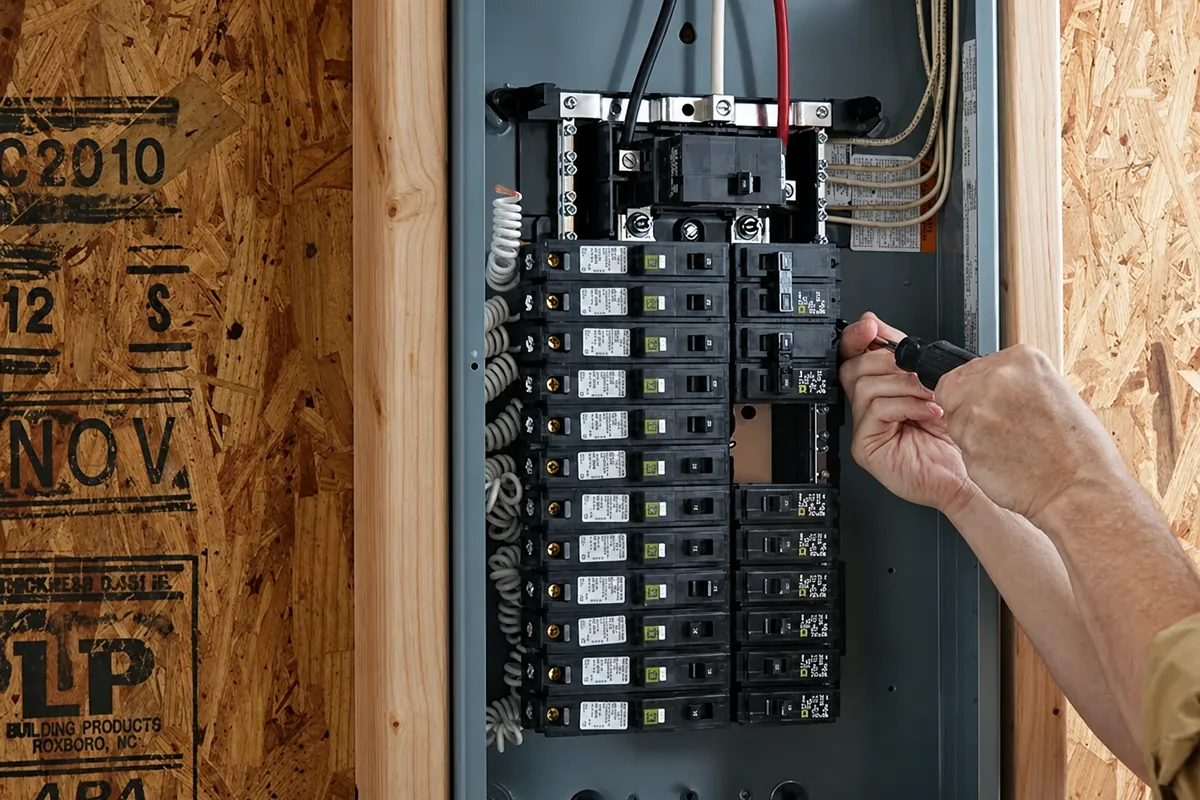
An electrical problem does not always announce itself with flames. Sometimes the first warning is a hot-plastic smell, an unfamiliar buzz from the panel or lights working in one part of the house but not another.
The safest response depends on what else is happening. A scorched appliance cord is different from an odour coming through a wall. A single tripped breaker is different from lights suddenly becoming unusually bright or dim.
Here is how to recognize an electrical emergency, what you can safely do and whether you should call 911, Hydro Ottawa or an emergency electrician in Ottawa.
When to leave and call 911
Get everyone outside and call 911 from a safe location if you see:
- fire or visible smoke;
- sustained sparking or electrical arcing;
- a downed power line; or
- an immediate risk of fire, electrical shock or serious injury.
Do not stop to find the source. Once outside, stay outside until emergency crews say it is safe to return.
Ottawa Fire Services advises residents to leave immediately when there is a fire, call 911 once safely outside and not re-enter the building.
A downed wire should always be treated as energized. Stay at least 10 metres away from the wire and anything it touches, including vehicles, trees, fences and puddles. Call 911 first, then Hydro Ottawa at 613-738-6400.
If a wire has fallen onto a vehicle, occupants should generally remain inside unless there is an immediate danger such as fire. Follow the emergency dispatcher’s instructions.
These precautions reflect Hydro Ottawa’s power-line safety guidance.
Quick decision guide
| What you notice | What to do |
|---|---|
| Fire, visible smoke or sustained sparking | Leave immediately and call 911 from outside. |
| Downed power line | Stay at least 10 metres away. Call 911, then Hydro Ottawa. |
| Burning smell from a wall, outlet or panel | Keep away. If the smell is strong or increasing, leave. Call 911 if you suspect a fire; otherwise, contact a Licensed Electrical Contractor. |
| Loud buzzing, crackling or heat at the panel | Do not open or touch the panel. Call an emergency electrician. |
| Power missing in part of the house | Check Hydro Ottawa’s outage information. Contact an electrician if the utility supply is normal. |
| Water near outlets, wiring or the panel | Do not enter the wet area. Ask Hydro Ottawa to disconnect the power safely. |
| One breaker has tripped without other warning signs | Follow the appliance and panel instructions. Do not keep resetting it. |
| A breaker trips again or will not remain on | Leave it off and have the circuit inspected. |
If you smell something burning
A burning or melting-plastic smell can come from an appliance, cord, outlet, switch, light fixture or wiring connection. Because odours can travel, the place where you notice the smell is not necessarily where the problem began.
If the smell clearly comes from a portable appliance, stop using it. Unplug it only when the plug, cord and outlet are cool, dry, undamaged and easy to reach. Do not pull out a hot or melted plug.
Treat the situation more seriously when the smell seems to come from an outlet, wall, ceiling or electrical panel. Do not remove a cover plate or open the panel to investigate. Keep people away and contact a Licensed Electrical Contractor.
If the smell grows stronger, heat increases, smoke appears or sparking begins, leave the building. Call 911 from outside if you suspect a fire.
Hydro Ottawa identifies burning smells and buzzing sounds as possible signs of overheating or faulty wiring and recommends having the equipment checked by a professional.
Useful details to give the electrician include:
- where and when you first noticed the smell;
- whether it is becoming stronger;
- what equipment was running at the time;
- whether lights flickered or a breaker tripped;
- any visible discolouration or melted material; and
- recent renovations, leaks, flooding or storm damage.
Do not turn equipment back on simply to see whether the smell returns.
If the electrical panel is buzzing
Some electrical equipment can produce a faint, steady hum during normal operation. A new, loud or worsening sound is different. Buzzing accompanied by crackling, popping, heat, flickering lights or a burning odour needs prompt attention.
Keep the panel closed. Even when the main switch or branch breakers are off, parts of the equipment may remain energized.
Call an emergency electrician if the panel is:
- making a loud or irregular noise;
- hot or unusually warm;
- giving off a burning smell;
- showing scorch marks or discolouration;
- associated with repeated breaker trips; or
- close to leaking or standing water.
Do not approach a panel that is wet, damaged, smoking, sparking, unusually hot or making loud crackling noises. If smoke or sustained sparking develops, leave and call 911.
The electrician will need to test the equipment before recommending a repair. A buzzing panel does not automatically require replacement, just as a tripped breaker does not automatically mean the breaker itself has failed.
If only part of the house has power
A partial outage may affect one circuit, several rooms or roughly half the home. The fault could be inside the house, at the electrical service or on Hydro Ottawa’s system. You cannot reliably identify the cause from the pattern alone.
First, look outside from a safe location. Are nearby homes or streetlights also without power? Then check the Hydro Ottawa outage map.
Outages can be reported:
- through Hydro Ottawa’s website or mobile app;
- by texting OUT to PWROUT (797688); or
- by calling the 24-hour outage line at 613-738-0188.
While the cause is unknown:
- avoid outlets or appliances that are behaving abnormally;
- switch off sensitive electronics if it is safe to do so;
- do not touch the meter, service mast or exterior cables;
- do not remove the electrical panel cover; and
- do not repeatedly reset breakers.
Call promptly if lights become unusually bright or dim, appliances run erratically or power cuts in and out. If Hydro Ottawa confirms that its supply is normal, contact a Licensed Electrical Contractor for electrical troubleshooting and repair.
Responsibility for exterior service equipment is not always obvious and can depend on the property and point of connection. Do not attempt to inspect or repair it yourself. Let Hydro Ottawa and the contractor determine who owns the affected equipment and what approvals are required.
If water reaches electrical equipment
Never enter a flooded basement or other wet area when water may have reached outlets, wiring, heaters, appliances or the electrical panel. A room can remain hazardous even when there are no sparks and the lights are off.
Hydro Ottawa advises residents to stay out of flooded areas and call 613-738-6400 to request a disconnection when water has contacted electrical components. It also warns against using water-damaged appliances or outlets, even after they appear dry.
If anyone is in immediate danger, call 911.
After the supply has been disconnected:
- Have a Licensed Electrical Contractor assess the affected system.
- Repair or replace water-damaged electrical equipment as required.
- Arrange any required Electrical Safety Authority notification and inspection.
- Wait for approval before the utility reconnects the service.
- Keep the resulting ESA documentation for your records and insurer.
Do not reuse an outlet, cord or appliance simply because it has dried.
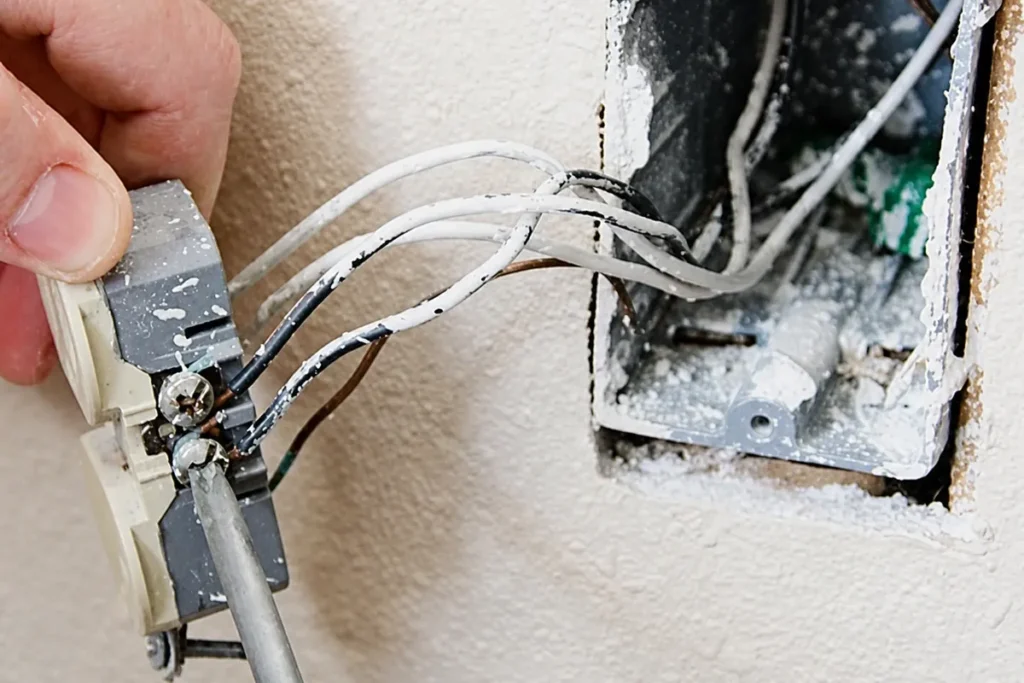
Can you reset a tripped breaker?
A circuit breaker is a safety device. A trip can indicate an overload, a faulty appliance or a problem with the circuit.
Do not reset a breaker associated with:
- a burning smell;
- unusual heat;
- buzzing or crackling;
- water;
- visible damage;
- sparking; or
- repeated trips.
If one breaker trips without any other warning signs, check the instructions for the appliance and electrical panel. A single reset may be appropriate if those instructions permit it and the panel is safe to approach.
Stop if the breaker trips again, refuses to reset or feels loose. Leave it off and arrange an inspection. Repeatedly resetting a breaker can repeatedly energize a faulty circuit and increase the risk of further damage.
Never remove the panel cover or attempt to tighten, test or replace a breaker yourself.
What happens during an emergency electrical visit?
The first priority is to make the property safe. Depending on the symptoms, the electrician may:
- inspect the panel and service equipment for visible damage;
- test the incoming supply and affected circuits;
- identify damaged breakers, devices, conductors or connections;
- isolate unsafe equipment;
- coordinate a utility disconnection;
- complete the necessary repair; and
- arrange an ESA notification and review when required.
Sometimes the problem can be repaired during the first visit. In other cases, the electrician may make the situation safe and return with parts or after Hydro Ottawa has completed its work.
Before approving non-emergency work, ask:
- what testing is included in the call-out fee;
- the hourly rate and any after-hours minimum;
- whether parts are available immediately;
- whether an ESA notification or inspection is required;
- what can safely remain energized; and
- for a written record of the diagnosis and work completed.
A responsible contractor should be able to explain what was found without claiming that every symptom requires a new panel or complete rewiring.
Hiring an electrician in Ontario
In Ontario, a business hired to perform electrical work in a home must be a Licensed Electrical Contractor. Ask for its seven-digit ECRA/ESA licence number and verify it through the Electrical Safety Authority’s contractor information and lookup service before authorizing work when circumstances allow.
An individual electrician or Master Electrician is not necessarily a Licensed Electrical Contractor. The business offering and contracting for the work must hold the required ECRA/ESA contractor licence.
ESA says almost all electrical work requires a notification of work, sometimes informally called a permit. The person performing the work files the notification. When you hire a Licensed Electrical Contractor, the contractor should file it rather than asking you to obtain it on the contractor’s behalf.
Ask whether the estimate includes:
- the emergency call-out charge;
- labour and materials;
- ESA notification and inspection fees;
- restoration or finishing work;
- a written invoice; and
- the applicable ESA documentation after completion.
When the work has been reviewed and accepted, ask the contractor for a copy of the ESA Certificate of Acceptance.
Price questions can wait when there is an active threat to life or property. In a stable situation, however, a clear explanation of fees and scope helps avoid surprises.
While you wait for help
Keep children and pets away from the affected area. If the power is out, use a battery-powered flashlight rather than candles.
Do not:
- remove an electrical panel cover;
- touch a scorched or hot outlet;
- handle damaged exterior service equipment;
- enter a wet room containing electrical equipment;
- pour water on an electrical fire;
- keep resetting a breaker; or
- switch equipment back on to reproduce a fault.
Pay attention to changes. If the smell grows stronger, heat increases, smoke appears or sparking begins, stop waiting inside. Leave the building and call 911 if you suspect a fire or an immediate danger to people or property.